An open-source application for rendering and analyzing acoustical properties of 3D spaces via meshes
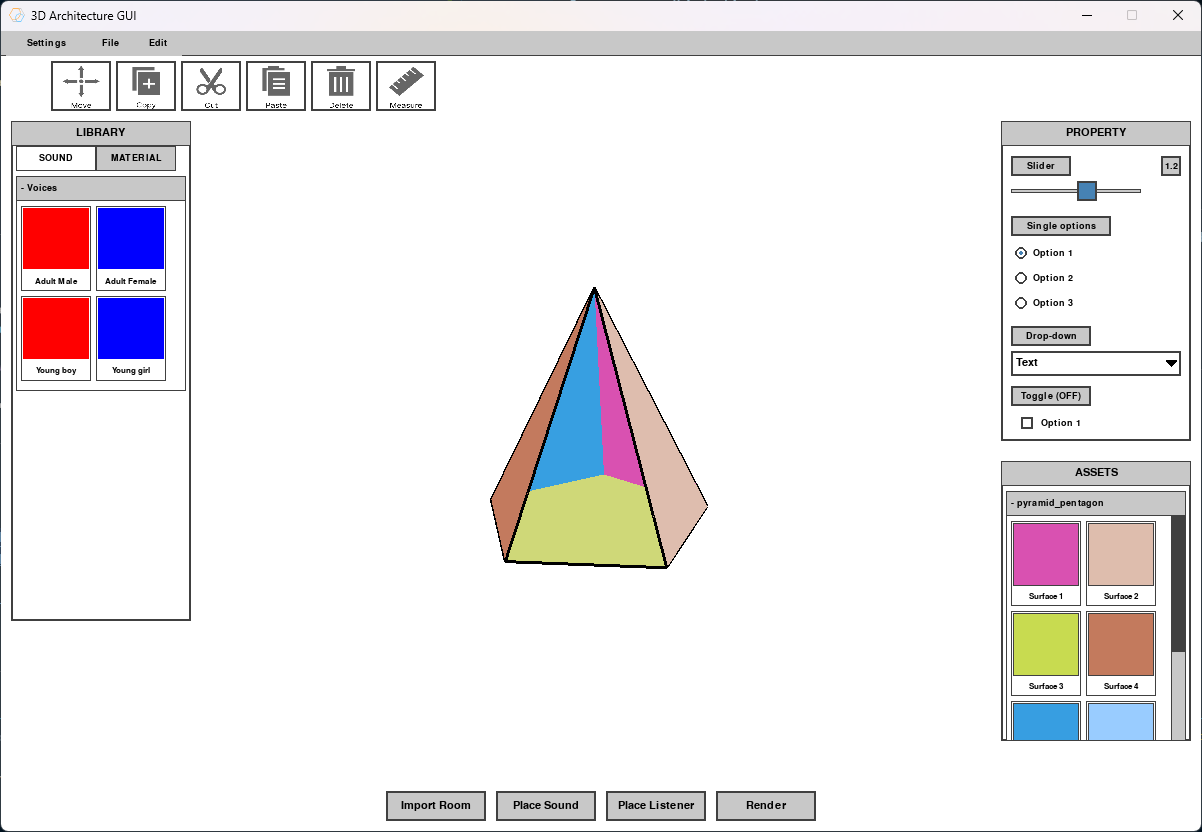
PyRoomStudio is a GUI application for rendering and analyzing acoustical properties of 3D spaces via STL meshes. It is built on top of the PyRoomAcoustics, a library for simulating acoustics algorithms.
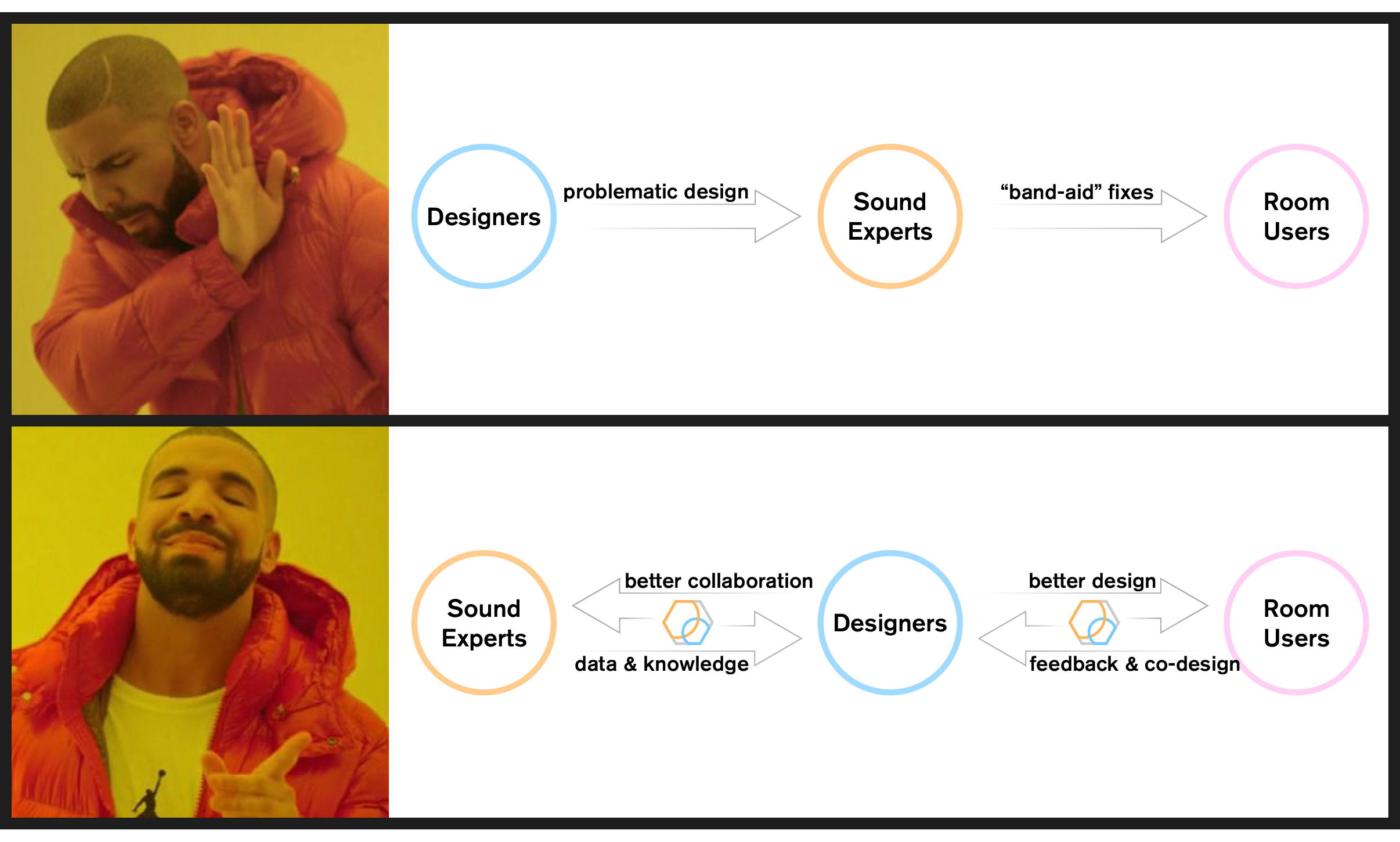
PyRoomStudio has two missions:
By accomplishing these missions, we hope to increase the usage of acoustic tools in the design community and make light of sound as a necessary consideration for future spaces.
PyRoomStudio is currently running on Python 3.9+. Make sure to have one of these versions installed before downloading and running the application.
$ git clone https://github.com/pyroomstudio/PyRoomStudio.git
$ python3 -m venv venv
$ source venv/bin/activate
(venv) $ pip install -r requirements.txt
$ python3 -m venv venv
$ source venv/Scripts/Activate
(venv) $ pip install -r requirements.txt
$ python3 main_gui.py
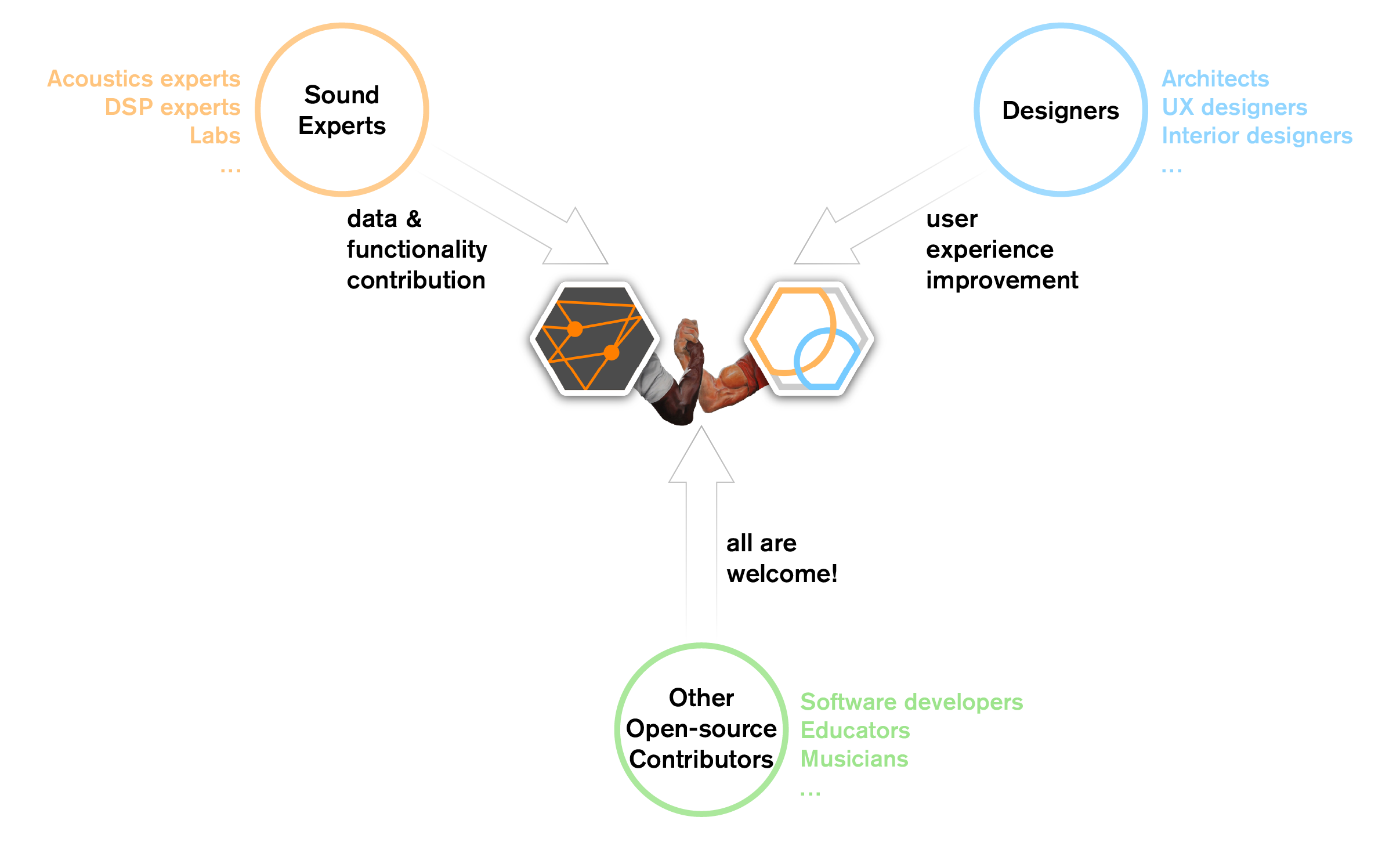
We are always accepting external contributions! We're looking for users who are interested in contributing code (GUI and app functionality) and/or material coefficients (for a public database).
The Issues tab on GitHub contains a running list of features to implement, as well as any bugs or problems that arise from development. For further details and discussions, please join our Discord server.
Environment libraries are provided in requirements.txt and consist of minimal tools needed to build the running simulation: PyGame, PyOpenGL, PyRoomAcoustics, and their required libraries.
We're also looking to expand our project into an open-source database of material coefficients. In the future, we want users to be able to drag-and-drop materials on different surfaces to improve the simulation process.